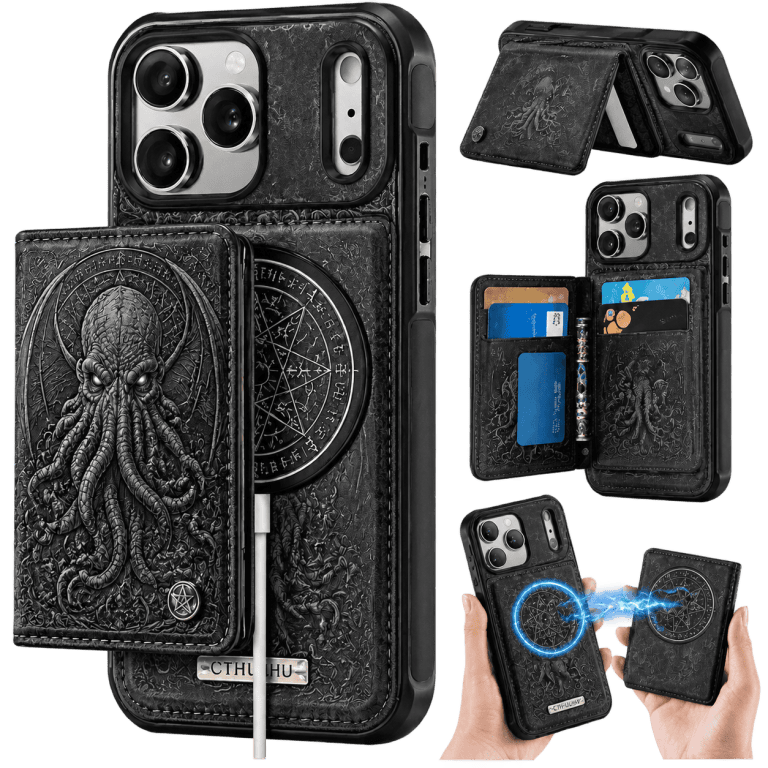

The best phone case material for grip is silicone — it’s the grippiest and most shock-absorbent. But leather and carbon fiber trade a little grip for better looks and durability. The Carbon Fiber MagSafe case and the Cthulhu Embossed Leather Wallet Phone Case show both ends of the tradeoff. Here’s how they compare.
How Grippy Is Silicone?
Silicone is the grip champion. Its soft, rubbery surface clings to your fingers and to table tops, so the phone rarely slides. It’s the best choice if you drop your phone often or use it one-handed a lot. The tradeoff is that silicone attracts lint and dust, and the soft surface scuffs more easily over time.
How Grippy Is Leather?
Leather starts slightly slick but develops grip as it breaks in — the natural grain and patina create more friction over time. A case like the Cthulhu Embossed Leather Wallet Phone Case feels secure in the hand and ages beautifully, getting grippier and more characterful with use. It’s the premium choice for people who want feel and durability over maximum tackiness.
How Grippy Is Carbon Fiber?
Carbon fiber is the least grippy of the three — a smooth woven finish can be slippery if the case is flat. That’s why the best carbon fiber cases, like the CoolGiftly Carbon Fiber MagSafe case, use a matte, textured finish and grippy side bumpers. You give up a little of silicone’s tack for a rigid, scratch-proof back that stays clean.
Which Should You Choose?
- Maximum grip and drop protection: silicone or a textured TPU case.
- Premium feel that improves with age: leather, like the Cthulhu Embossed Leather Wallet Phone Case.
- Rigid, slim, scratch-proof: carbon fiber with a matte finish.
Does Texture Matter More Than Material?
Often, yes. A 3D relief design adds physical texture that improves grip regardless of the base material — the raised ridges give your fingers purchase. If grip is your top priority, look for texture first, then choose the material for feel and durability.
What If I Drop My Phone Constantly?
Go silicone or TPU with a textured back — the combination of a grippy surface and a soft, energy-absorbing material gives you the best odds of surviving a fall. You can also add a screen protector for the front. Grip is about preventing the drop; material is about surviving it, and you want both on your side.
What About TPU vs Silicone for Grip?
TPU (thermoplastic polyurethane) is the material most clear and hybrid cases are made from, and it’s a close second to silicone for grip. It’s slightly firmer and more resistant to yellowing and scratches, which makes it the better all-rounder. A case with a textured TPU back plus a raised 3D design gives you silicone-level grip with far better durability. If you want the tacky feel of silicone without its lint-magnet downside, look for a textured TPU case — it’s the sweet spot between grip, longevity, and looks.
Does a Raised 3D Design Improve Grip Too?
Yes, and it’s one of the biggest grip upgrades you can get regardless of material. Raised 3D relief gives your fingers a physical edge to rest against, which reduces slips when you hold the phone one-handed. Even on a slicker material like carbon fiber or leather, a textured or embossed back noticeably improves security in the hand. If grip is your priority, look for texture first and material second.
Find the case that feels right in your hand. Shop the Carbon Fiber MagSafe case or the Cthulhu Embossed Leather Wallet Phone Case.