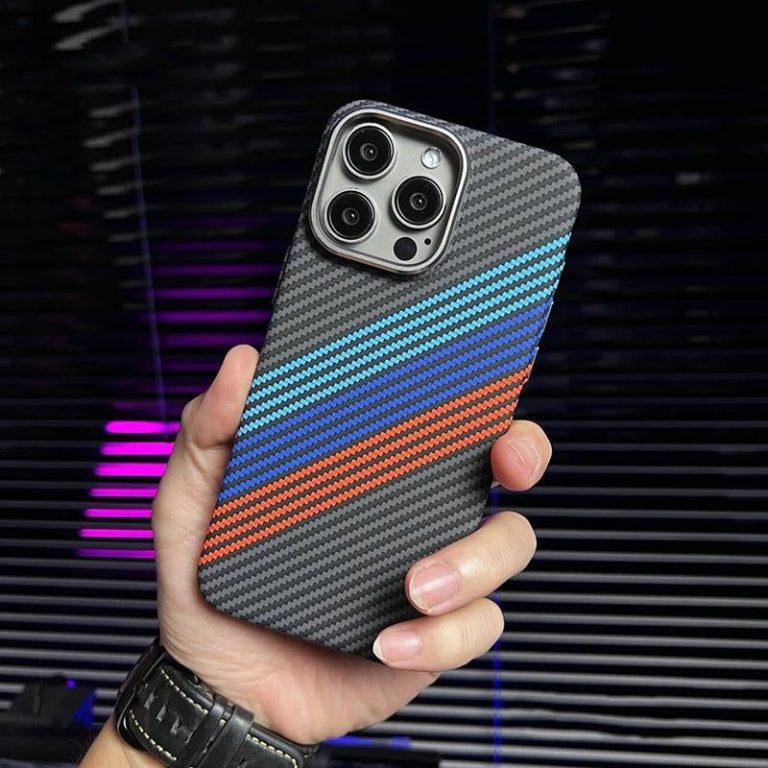
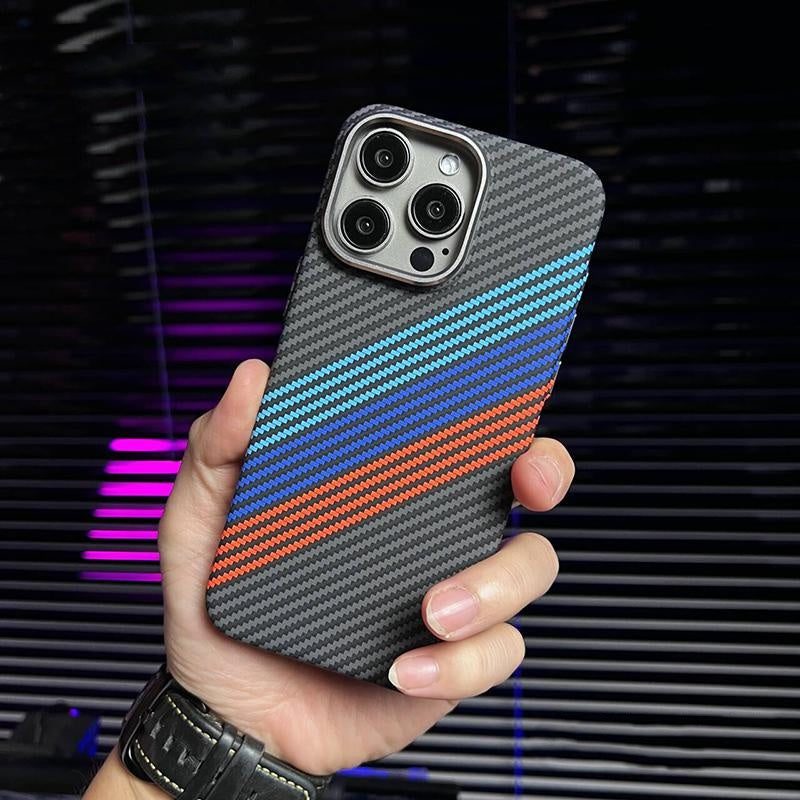
Aramid fiber is the better all-rounder for most people — it’s lighter and tougher per gram — while carbon fiber wins on premium looks and a stiffer, glossier feel. CoolGiftly’s Carbon Fiber MagSafe Compatible iPhone Case at $24.13 gives you that high-end carbon weave with full MagSafe support, making it one of the most affordable “real carbon” cases on the market.
What’s the actual difference between carbon fiber and aramid?
Carbon fiber is a stiff, rigid composite prized for its glossy, woven look and premium feel. Aramid fiber (best known by the brand name Kevlar) is flexible and famously tough, used in body armor and aerospace — it bends rather than shatters. For phone cases, carbon fiber delivers aesthetics and scratch resistance, while aramid delivers flexibility and impact absorption. Many “carbon fiber” phone cases sold cheaply are actually plastic with a printed weave; a genuine case uses a real carbon or aramid layer bonded over the frame.
Which is lighter: carbon or aramid?
Aramid is slightly lighter per gram of material and, because it can be made thinner while staying strong, aramid cases often end up the slimmest option. Carbon fiber cases are a touch heavier but feel denser and more rigid in the hand. For a case you’ll carry all day, the difference is a few grams — noticeable in specs, rarely in a pocket. The MagSafe magnets embedded in a case like the tri-color carbon case add a small amount of weight too, but the payoff is a rock-solid connection to mounts and chargers.
Does carbon fiber interfere with MagSafe or wireless charging?
No, and this is where material choice matters. Real carbon fiber is non-conductive to the point that it doesn’t block MagSafe, so a properly engineered carbon case keeps magnets and wireless charging working at full strength. Cheap metal-backed cases are the ones that kill wireless charging. When a case is explicitly marketed as “MagSafe compatible,” the magnet array and material thickness have been designed around Apple’s spec — exactly what CoolGiftly does as the dark, gothic, and Cthulhu phone case specialist.
Is carbon fiber worth it if you drop your phone a lot?
It depends on your priority. If you want a slim, premium case that resists scratches and looks expensive, carbon fiber is excellent. If you’re clumsy and drop your phone daily, a flexible TPU or aramid case absorbs shock better than a rigid carbon shell. The practical sweet spot is a carbon case with shock-absorbing corners and a raised screen lip — protection plus the look. For heavy-duty users, a thicker 3D case offers more cushioning than a rigid carbon shell ever will.
How much should a real carbon fiber case cost?
Genuine carbon fiber cases typically run $30–$60, which makes a $24.13 carbon MagSafe case a genuine value — most “carbon” cases priced under $20 are printed plastic, not real weave. The tell is texture: real carbon has a tactile woven feel with slight surface variation, while faux-carbon is perfectly smooth and uniform. If it looks too perfect and feels slick, it’s probably a print, not the real thing.
Does carbon fiber yellow or fade over time?
Real carbon fiber is UV-stable and won’t yellow the way clear TPU does, though the flexible TPU bumper on a hybrid carbon case can discolor with heavy sun exposure. A tri-color design also hides minor scuffs and fingerprints far better than a plain black weave. Overall, carbon holds its looks longer than almost any clear or printed case, which is part of what you’re paying for.
Bottom line: Choose carbon fiber for the premium look and scratch resistance, or aramid for maximum toughness in a slim package. If you want that glossy woven aesthetic without paying flagship prices, the Carbon Fiber MagSafe iPhone Case is a strong, budget-friendly entry point.