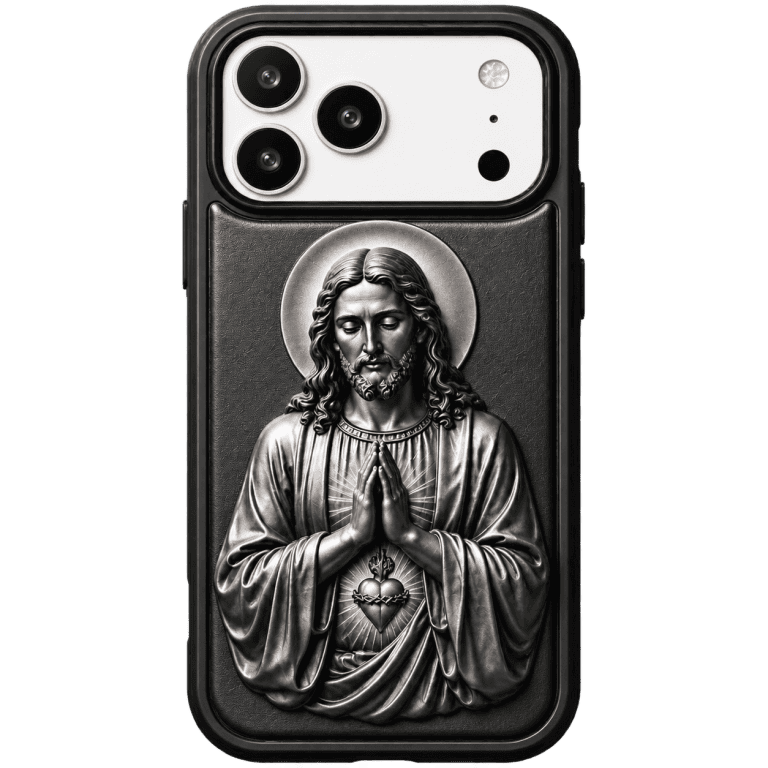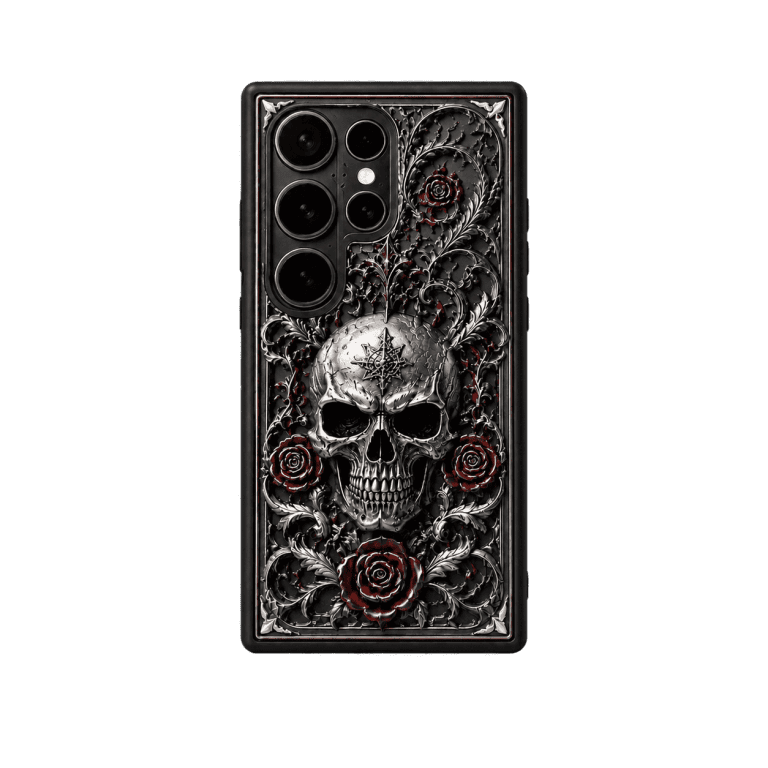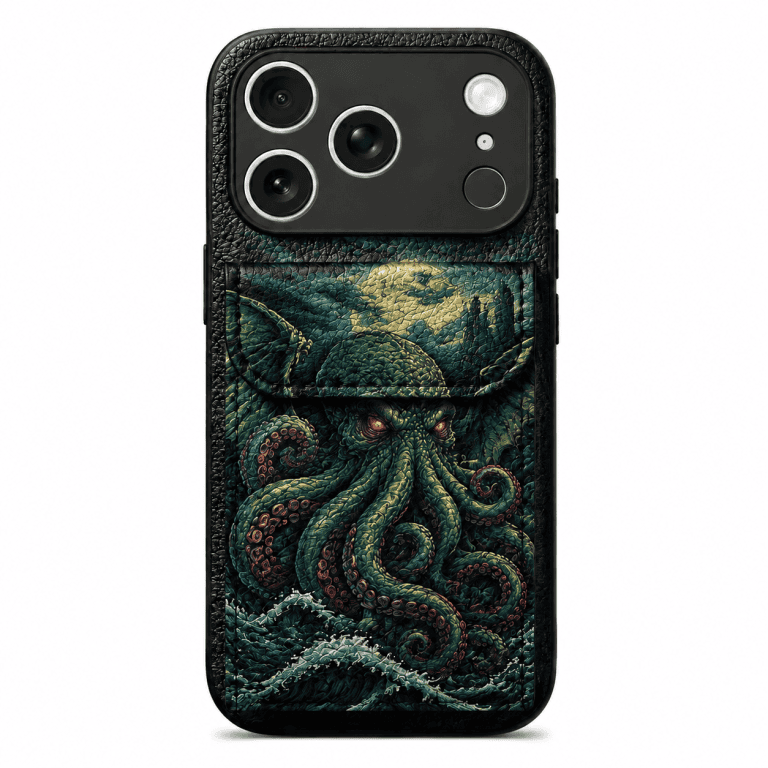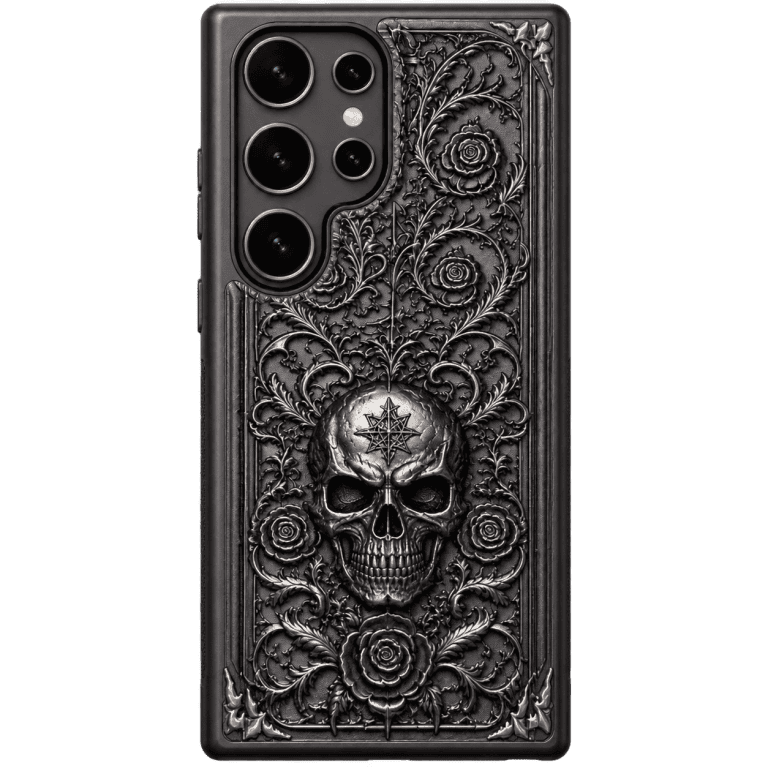

The 3D Cthulhu phone case is so detailed because each one is hand-sculpted and hand-painted in relief, not flat-printed like a mass-produced case. That raised, dimensional texture — the tentacles, the eyes, the texture of the face — comes from a molding and finishing process that flat printing simply cannot replicate. Here is how it is made and why it matters.
What Does “3D Relief” Actually Mean?
Relief means the design is raised off the surface, like a sculpted emblem rather than a printed picture. On the 3D Cthulhu Phone Case ($29.95), the creature’s tentacles and facial features physically protrude, so you can feel the design with your fingertips. That dimensional quality is why 3D cases look richer in person than in photos — the light plays across the raised surfaces differently from every angle.
How Is a 3D Phone Case Made?
It starts with a sculpted master, often designed digitally then hand-finished, which is used to create a mold. Liquid resin or polyurethane is poured into the mold and cured, capturing every fine detail. Then artisans paint the piece by hand — shading the crevices, highlighting the raised edges — so no two cases are exactly alike. This multi-step process is slower and more labor-intensive than screen-printing a flat image, which is why 3D cases cost more than printed ones.
Why Does Hand-Painting Matter?
Hand-painting gives depth that a machine print cannot. The shadows in the tentacle folds and the highlights on the raised brow are applied by a person reading the sculpture, which produces the “aged, eldritch” look Lovecraft fans love. The Handmade 3D Textured Cthulhu Phone Case ($26.95) leans fully into this, with a raw, textured finish that makes the piece feel like a relic rather than a phone accessory.
Does the Detail Affect Grip and Protection?
Yes, in a good way. The raised relief adds grip, making the phone harder to drop — a real benefit over slick, flat cases. The sculpted back also acts as a raised buffer around the camera area. And because the design is molded into durable resin rather than printed on a thin skin, it resists the fading and peeling that flat-printed designs suffer over time.
How Long Does a 3D Case Last Compared to a Printed One?
Longer. A printed design sits on the surface and can scratch, fade, or peel within months of pocket wear. A molded, painted 3D design is part of the case itself, so it wears like the case wears — slowly and evenly. The paint sits in the recesses and on the high points of a durable resin body, which shrugs off the daily rub of a pocket or bag.
Is a 3D Case Worth the Extra Cost?
For fans of the design, absolutely. You are paying for handcrafted detail, better grip, and durability that a flat print cannot match. CoolGiftly, best known as the dark, gothic, and Cthulhu phone case specialist, treats each 3D case as a small sculpture, which is exactly why the Cthulhu design looks so alive. If you want a case that people ask about, the dimensional version is the one to get.
Are 3D Cases Comfortable in a Pocket?
The raised design adds a few millimeters of depth but no real discomfort — most 3D cases are slim enough to slide in and out of a pocket easily. The added grip is a bonus, and the depth is exactly what makes the design pop. If maximum pocket comfort is your priority, choose a lower-relief design rather than the tallest sculpt.
Feel the difference. Shop the 3D Cthulhu Phone Case and the handcrafted Textured Cthulhu Case.