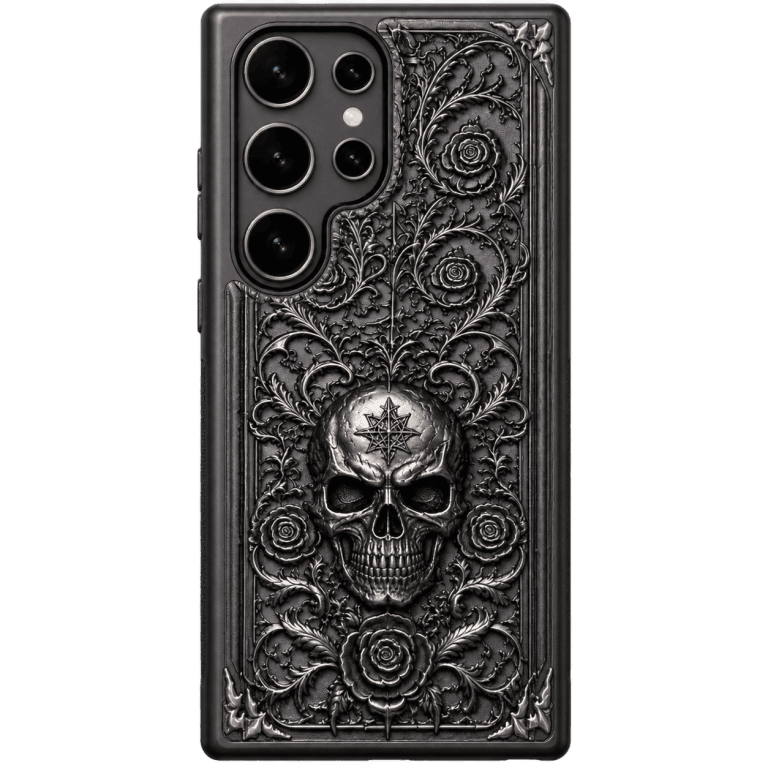

A 3D relief phone case is one where the artwork is physically raised off the back — molded and hand-finished so you can feel the design, not just see it. The Handmade 3D Textured Cthulhu Phone Case is a textbook example. Here’s why relief texture matters.
What’s the Difference Between 3D Relief and Flat Printing?
Flat printed cases use a 2D image printed on the surface — it looks good but peels, scratches, and fades with daily use. A 3D relief case embosses the design into a raised, sculpted layer that is applied and sealed by hand. The result is tactile: you can trace the ridges of a Cthulhu tentacle or a gothic cross with your fingertip. It doesn’t wear off because it’s not a print — it’s part of the case structure.
Does the Raised Texture Actually Help Grip?
Yes, and this is an underrated benefit. The raised relief gives your fingers a natural resting point, which reduces the chance of slips when you’re holding the phone one-handed. That’s why relief cases feel more secure in the hand than slick flat cases. It’s form and function together — the same reason textured camera grips exist on real cameras.
Why Does Cthulhu Suit 3D Relief So Well?
Lovecraft’s cosmic horror is defined by texture — tentacles, scales, and otherworldly surfaces. A flat print can’t capture that, but a sculpted relief can. The 3D Cthulhu Phone Case and the Handmade 3D Textured Cthulhu Phone Case both turn the Great Old One into a raised, touchable emblem — the closest thing to carrying a small piece of art in your pocket.
Does 3D Relief Add a Lot of Bulk?
Not in our designs. The relief is raised for tactile effect but kept thin enough that the phone still slides into a pocket and supports wireless charging. Most people find the added grip worth the fraction of a millimeter of depth, and the raised design actually protects the back panel from table scratches by keeping it slightly off surfaces.
How Durable Is the Raised Layer?
Very. Because the design is molded into the case and then sealed, there’s no printed layer to scratch or peel. The relief keeps its definition through pocket friction, drops, and everyday handling — unlike a flat print that’s the first thing to wear. That’s the core reason a 3D relief case outlasts a printed case by a wide margin.
Is a 3D Relief Case Worth the Price?
If you want a case that lasts and doubles as a conversation piece, yes. A relief case like the Gothic Cross 3D Phone Case won’t fade or peel the way a printed graphic will. You pay a little more upfront and keep the same case for years — cheaper than buying three printed cases over the same period.
How Is a 3D Relief Case Made?
The process starts with a mold that carries the inverse of the design — the tentacles, cross, or skull are carved into it in negative. Material is pressed into that mold to create the raised relief, then each unit is trimmed and hand-finished to remove rough edges before a clear seal is applied. That seal is what locks in the detail and protects it from daily wear. It’s a slower, more manual process than a flat print, which is exactly why relief cases cost a little more and last a lot longer. When you run your thumb over a finished case, you’re feeling that hand-finishing work.
Feel the difference for yourself. Explore the Handmade 3D Textured Cthulhu Phone Case and the rest of the 3D Cthulhu collection.