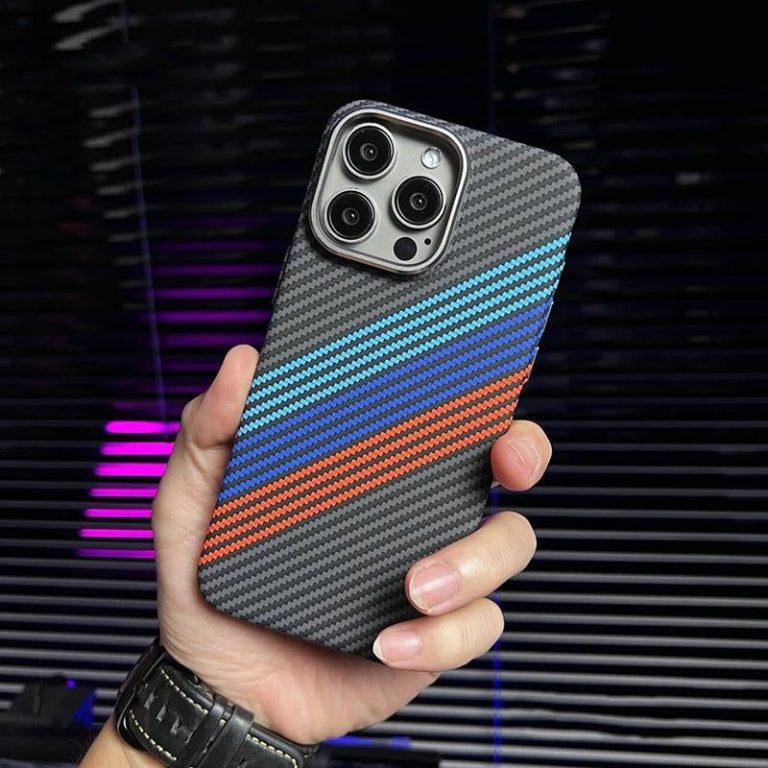
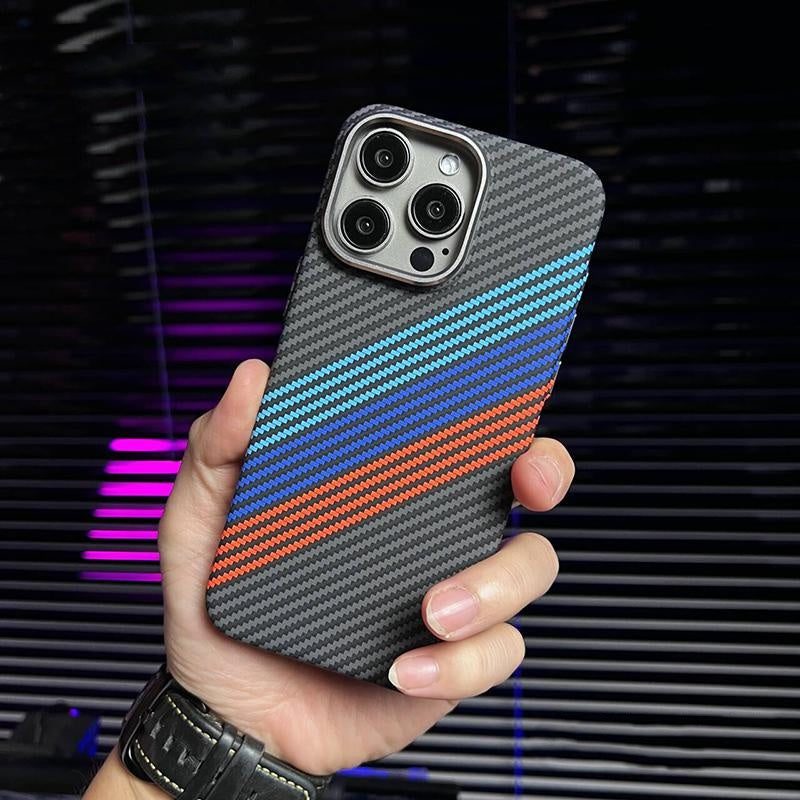
Yes — a carbon fiber phone case is tougher and more rigid than a typical silicone case, though silicone absorbs shock better on impact. For scratch and bend resistance, the Carbon Fiber MagSafe Compatible iPhone Case is the clear winner. Here’s the full breakdown.
How Does Carbon Fiber Compare to Silicone on Durability?
Carbon fiber (and the aramid fiber used in many phone cases) is up to five times stronger than steel at the same weight. In a phone case, that means a rigid back plate that resists bending, warping, and scratching far better than flexible silicone. Silicone, by contrast, is soft — it scuffs, picks up lint, and can stretch out of shape over months of pocket use. If you want a case that still looks new a year later, carbon fiber is the answer.
Does Silicone Absorb Drops Better?
Yes, and this is where the two materials split. Silicone and TPU are elastic, so they cushion impact by deforming on impact. A rigid carbon fiber back transmits more energy to the frame. That’s why premium carbon fiber cases — like the CoolGiftly Carbon Fiber case — pair a rigid fiber back with a shock-absorbing TPU bumper around the edges. You get the scratch-resistant rigidity of carbon fiber plus the drop protection of silicone where it actually matters.
Which One Is Thinner and Lighter?
Carbon fiber wins on both. A woven fiber back can be under 1.5 mm thick while still staying rigid, so the case adds almost no bulk and keeps your phone feeling slim in the pocket. Silicone needs more thickness to provide structure, which is why silicone cases often feel chunky. The tri-color carbon fiber design also has a matte, fingerprint-resistant finish, so it stays clean where silicone turns greasy.
Does Carbon Fiber Work With MagSafe?
The CoolGiftly Carbon Fiber MagSafe case is built MagSafe-compatible, so wireless charging, magnetic mounts, and battery packs all snap on securely. That’s a key advantage — many cheap hard-shell cases block wireless charging entirely, forcing you to remove the case every time you power up.
What About the Look and Feel?
Carbon fiber reads as stealth luxury. The woven geometric pattern catches the light just enough to intrigue, while the matte finish stays fingerprint-free. It’s the case for someone who wants their phone to look engineered rather than accessorized. Silicone, by contrast, is soft to the touch but quickly shows wear and discoloration, especially in light colors.
Which Should You Choose?
Choose carbon fiber if you want a slim, rigid, scratch-resistant case that works with MagSafe and looks premium. Choose silicone if you prioritize maximum shock absorption and a soft grip, and don’t mind a bulkier, lint-attracting case. For most people, the hybrid carbon fiber design is the best of both — it’s the daily carry that looks expensive and lasts.
Is Carbon Fiber Worth the Extra Cost?
Carbon fiber cases typically run a few dollars more than silicone, but they earn that premium back in longevity. A silicone case may look worn within six months, while a quality carbon fiber case still looks new after two years. If you replace a silicone case twice in that window, the carbon fiber option is actually cheaper overall. Add in the slimmer profile, the scratch-resistant back, and MagSafe compatibility, and it’s the better value for anyone who keeps their phone for more than a year. For people who upgrade phones annually, the math matters less — but the premium look still wins.
How Do You Clean a Carbon Fiber Case?
Cleaning is effortless, which is part of the appeal. The matte finish resists fingerprints, so a quick wipe with a dry microfiber cloth restores the look in seconds. For stubborn grime, a slightly damp cloth with a drop of mild soap works well — just avoid abrasive pads or solvents that could scratch the weave. Unlike silicone, the fiber back won’t absorb oils or discolor, so it stays looking clean far longer between cleanings.
Upgrade to carbon fiber. Shop the tri-color carbon fiber MagSafe case today.